Molto meaning is simple: it means “very” or “a lot” in Italian. This guide shows how molto works in everyday Italian phrases, in music and in grammar.
Table of Contents
What Does Molto Mean?
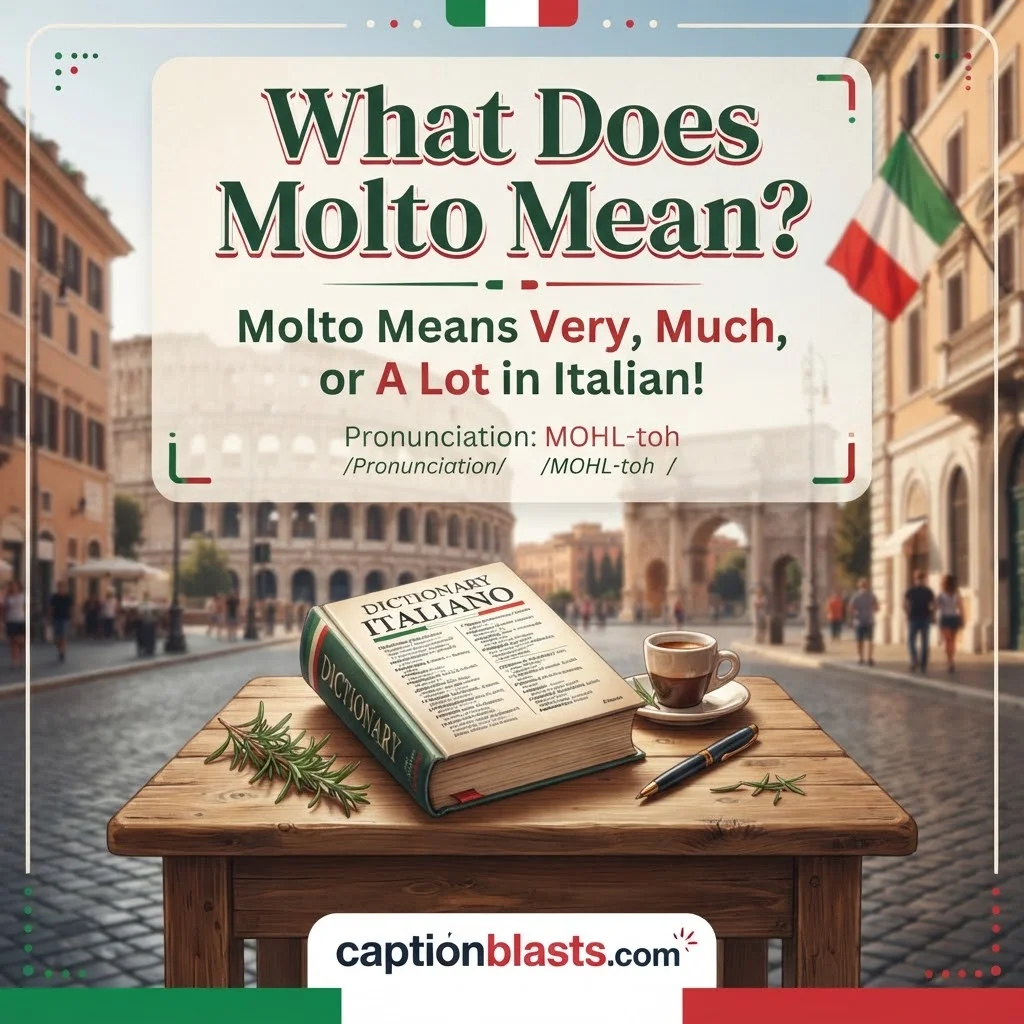
Molto is an Italian word for “very,” “much” or “a lot.” It is tiny, but it shows up in speech, menus and sheet music.
What does molto mean? Molto means “very” or “a lot” in Italian. In music, it means “very” or “much” and sits next to another musical direction.
Say it MOHL-toh. Stress the first syllable.
Molto plays three roles, according to Wiktionary’s Italian entry:
- Adverb: very, really (molto tardi, “very late”)
- Determiner: a lot of (molti amici, “many friends”)
- Noun: a lot, a great deal
The word comes from Latin multus, which means “much.” That root also gave English multiple, multiply and multicultural. Cousins of molto include Portuguese muito and Catalan molt.
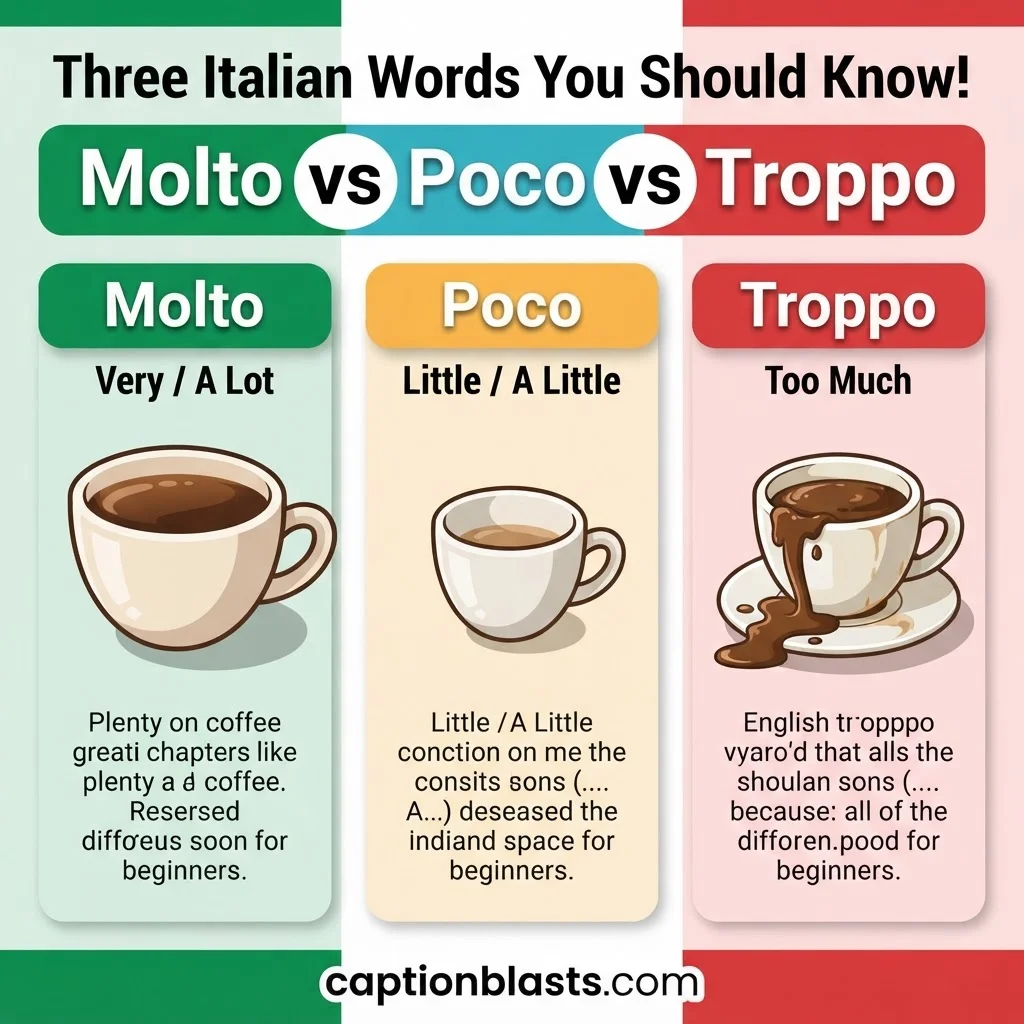
The opposite of molto is poco, which means “little” or “few.”
Just as understanding molto helps you communicate more naturally in Italian, learning modern internet slang can make online conversations easier to follow. For example, knowing the SYBAU meaning helps you recognize how viral acronyms express emotions and attitudes in everyday digital communication.
Molto Meaning in Music
Just as molto adds emphasis to everyday Italian expressions, Spanish uses phrases that make conversations warmer and more meaningful. For example, understanding the meaning of mucho gusto can help you confidently greet someone in Spanish and respond naturally when meeting them for the first time.
In music, molto works as an intensifier. It tells the player to push a direction further.
Italian is known as the language of music, so molto appears on scores worldwide. It never stands alone. It always pairs with another term.
What does molto mean in music? It means “very” or “much.” It strengthens a tempo marking, an expression marking or a change in energy.
| Term | Plain-English meaning | Feel |
|---|---|---|
| molto adagio | very slow | calm, heavy |
| molto allegro | very fast and lively | bright |
| allegro molto | very fast and lively | bright |
| molto espressivo | very expressive | emotional |
| molto cantabile | very singing | smooth, lyrical |
| molto più animato | much more lively | rising energy |
Molto can come before or after the term. Molto allegro and allegro molto point the same way.
Other Italian words change the strength of a direction:
- Assai also means “very.”
- Poco means “a little.”
- Ma non troppo means “but not too much.”
For example, allegro ma non troppo means “fast, but not too fast.”
A quick tip for students: read molto first. Then ask, “Very what?” The next word answers it.
How to Use Molto in Italian
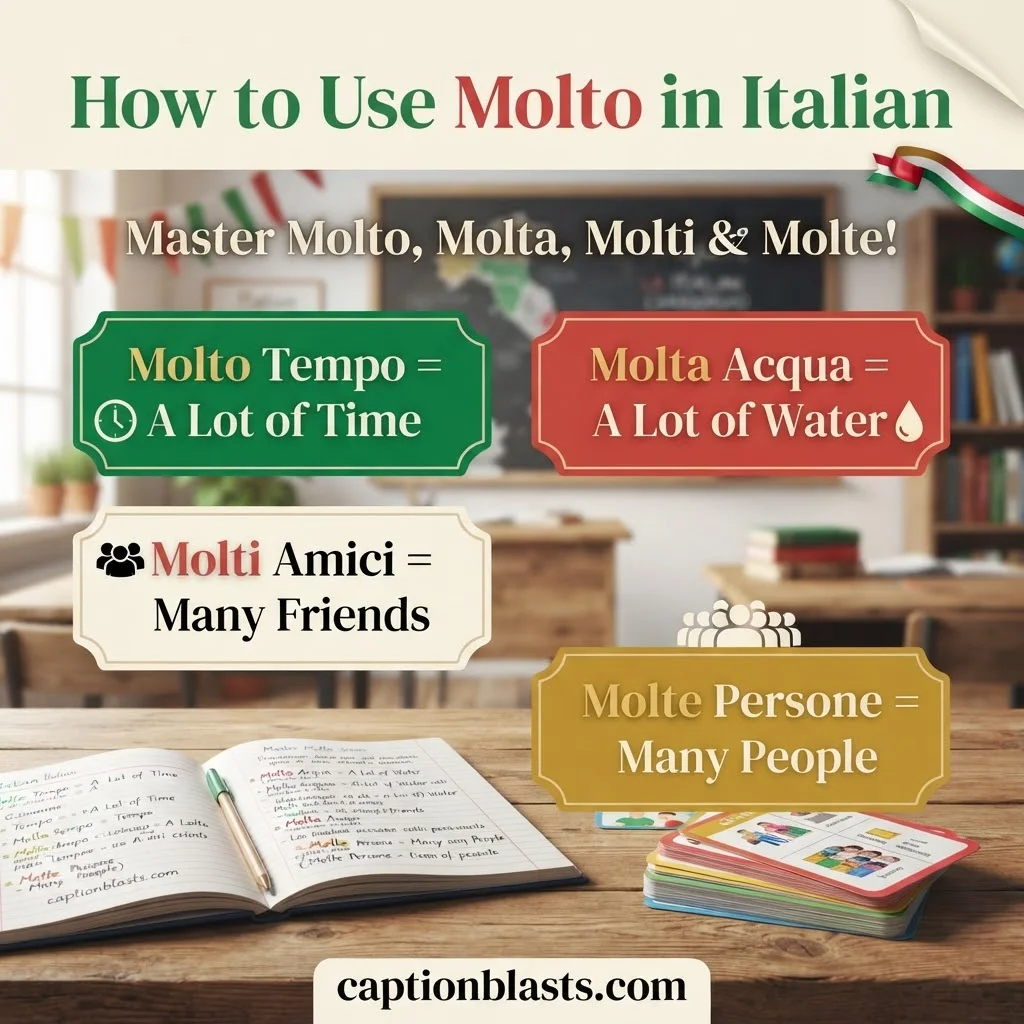
Molto follows two clear rules. The first one decides whether the word changes form.
How do you use molto in Italian? Keep molto the same before adjectives and adverbs. Change it to match the noun when it means “a lot of.”
Rule one: molto stays the same. Use it before an adjective or an adverb.
- molto bello — very beautiful
- molto bene — very well
- molto tardi — very late
- molto veloce — very fast
Rule two: molto changes. Use it before a noun, and match the noun’s gender and number.
| Form | Use with | Example | Meaning |
|---|---|---|---|
| molto | masculine singular | molto tempo | a lot of time |
| molta | feminine singular | molta acqua | a lot of water |
| molti | masculine plural | molti amici | many friends |
| molte | feminine plural | molte persone | many people |
Quick test: is the next word a noun? Change molto. Is it an adjective or adverb? Leave it alone.
More molto grammar rules:
- After verbs: Mi piace molto. (“I like it a lot.”)
- With comparisons: molto più veloce means “much faster.”
- For time: Aspetto da molto. means “I’ve been waiting a long time.”
- Stronger form: moltissimo means “very, very much.”
Learners often mix molto with similar words:
- Troppo means “too much.”
- Tanto means “so much.”
- Poco means “little.”
Watch for two common slips:
- Say molti amici, not molto amici.
- Say molte grazie or grazie mille, not molto grazie.
Molto Bene Meaning and Common Italian Phrases
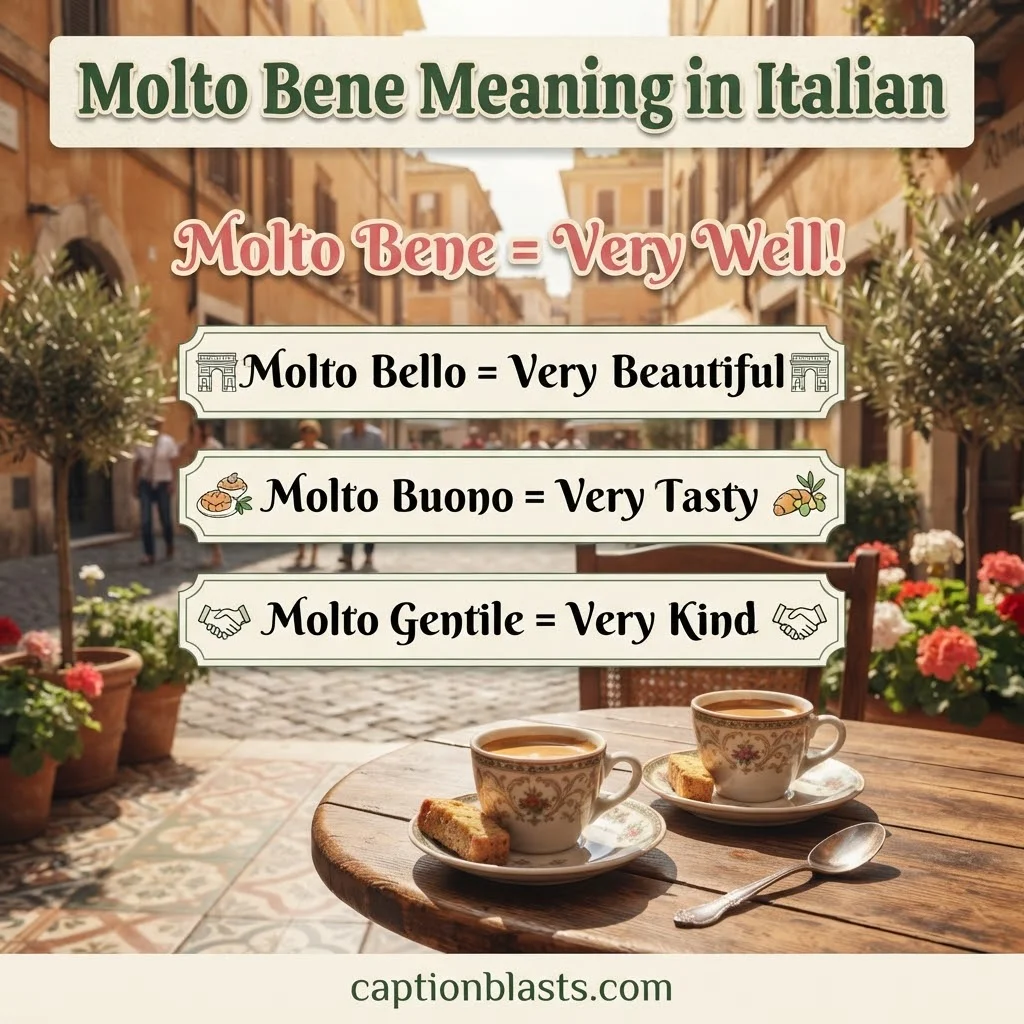
Molto bene means “very well” or “very good.” Italians use it to answer, praise and approve.
What does “molto bene” mean in Italian? It means “very well.” Bene is an adverb, so molto never changes here.
Try these everyday Italian phrases:
- Come stai? Molto bene, grazie. — How are you? Very well, thanks.
- Molto bene! — Very good! Great job!
- Molto bello. — Very nice.
- Molto buono. — Very tasty.
- Molto gentile. — Very kind.
- Molto bravo. — Very skilled. Use brava for a woman.
- Molto piacere. — Very nice to meet you.
Want to go bigger? Say benissimo. It means “very, very well.”
All of these work in casual and polite settings. English speakers also borrow molto for fun, as in “molto bello.” In Italy, though, it is just a normal, everyday word.
FAQs
What does molto mean?
Molto means “very,” “much” or “a lot” in Italian. It works as an adverb before adjectives (molto bello), after verbs (mi piace molto) and as a determiner before nouns (molta acqua). It comes from Latin multus, which means “much.”
What does Molto mean in music?
In music, molto means “very” or “much.” It strengthens a tempo or expression direction. For example, molto adagio means “very slowly” and molto espressivo means “very expressively.” Molto always pairs with another term, either before or after it.
How do you use “molto” in Italian?
Keep molto the same before adjectives and adverbs, as in molto bene. Change it when it describes a noun: molto, molta, molti, molte. After a verb, it means “a lot,” as in lavoro molto. For “very, very much,” use moltissimo.
What does “molto bene” mean in Italian?
Molto bene means “very well” or “very good.” People say it to answer Come stai? or to praise someone’s work. Because bene is an adverb, molto stays the same. For an even stronger version, say benissimo.
Conclusion
Molto is a small word with a big job. It means “very” or “a lot,” it boosts musical directions, and it changes form only before nouns. Master the four forms and a few phrases like molto bene, and you will sound clear and natural in Italian.
CaptionBlasts.com Team is a group of passionate content creators and digital writers dedicated to helping people express themselves through creative and engaging captions.