Someone says “mucho gusto” and you freeze. The mucho gusto meaning is simple, and this guide gives you the English translation, the literal meaning, and easy replies that sound natural.
Table of Contents
What Does Mucho Gusto Mean in English?
Just as mucho gusto expresses pleasure when meeting someone in Spanish, Italian uses words like molto to add emphasis and express feelings. Understanding the meaning of molto in Italian can help you discover how everyday expressions work across different languages.
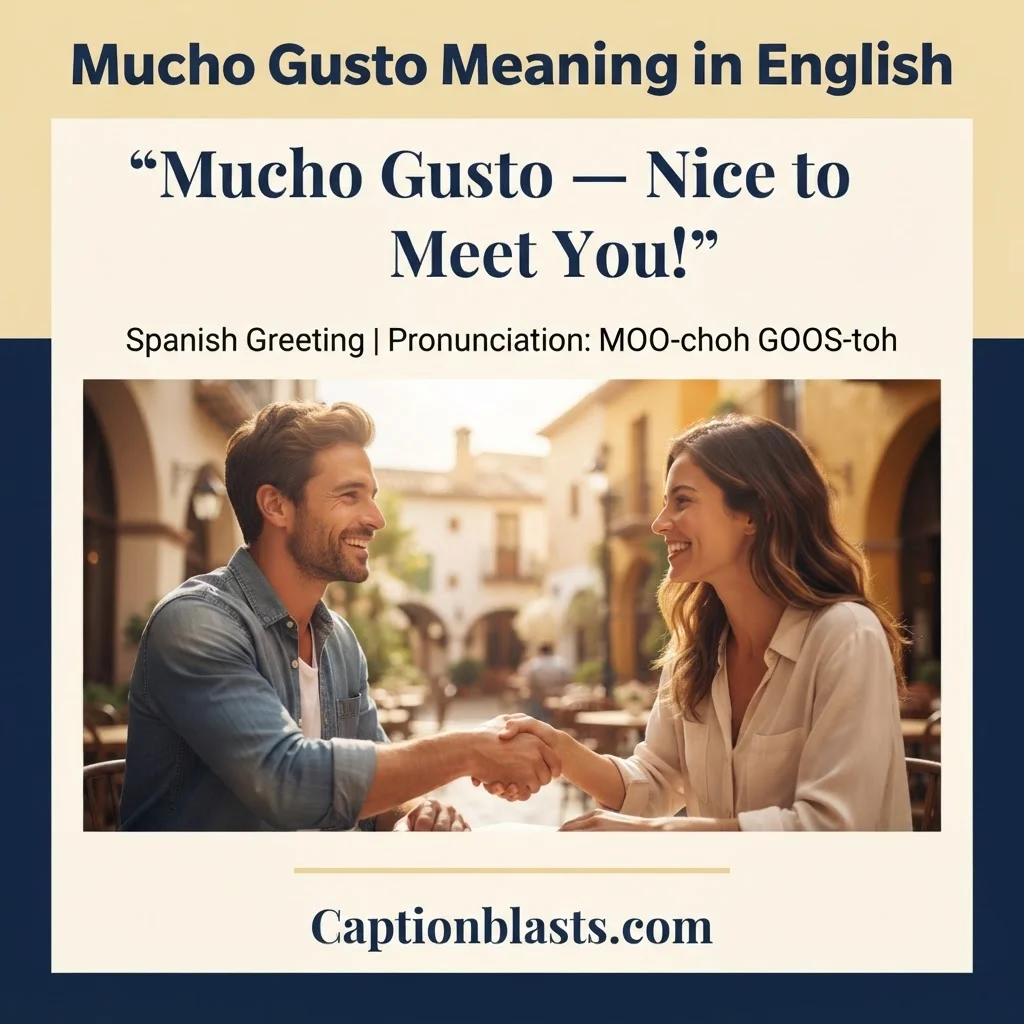
Mucho gusto means “nice to meet you” in English. It is a Spanish greeting people say when they meet someone for the first time.
You can also translate it as “pleased to meet you” or “it’s a pleasure to meet you.”
Here is how the two words break down:
- Mucho means “much” or “a lot.”
- Gusto means “pleasure” or “liking.”
Put together, they mean “much pleasure.” English speakers say “nice to meet you” instead, but the feeling is the same.
Pronunciation: say it as MOO-choh GOOS-toh. Keep the “u” sounds round, like “moo.” Many English speakers say “MUCK-oh GUS-toe,” which sounds off.
Example:
- “Hola, me llamo Ana. Mucho gusto.”
- “Hi, my name is Ana. Nice to meet you.”
When to Use Mucho Gusto
Understanding slang like LMR makes online conversations easier, but knowing what to say when meeting someone is just as useful. If you’re chatting with a Spanish speaker for the first time, learning what mucho gusto means and how to respond can help keep the conversation flowing naturally.
Use it the first time you meet someone. It works at work, at parties, and in new chats.
Is mucho gusto polite? Yes. It is a polite greeting that fits both formal and casual settings. It is not flirty on its own.
Good moments to use it:
- When a friend introduces you to someone.
- When you meet a coworker, client, or neighbor.
- When you meet a friend’s family.
- When you join a new group chat.
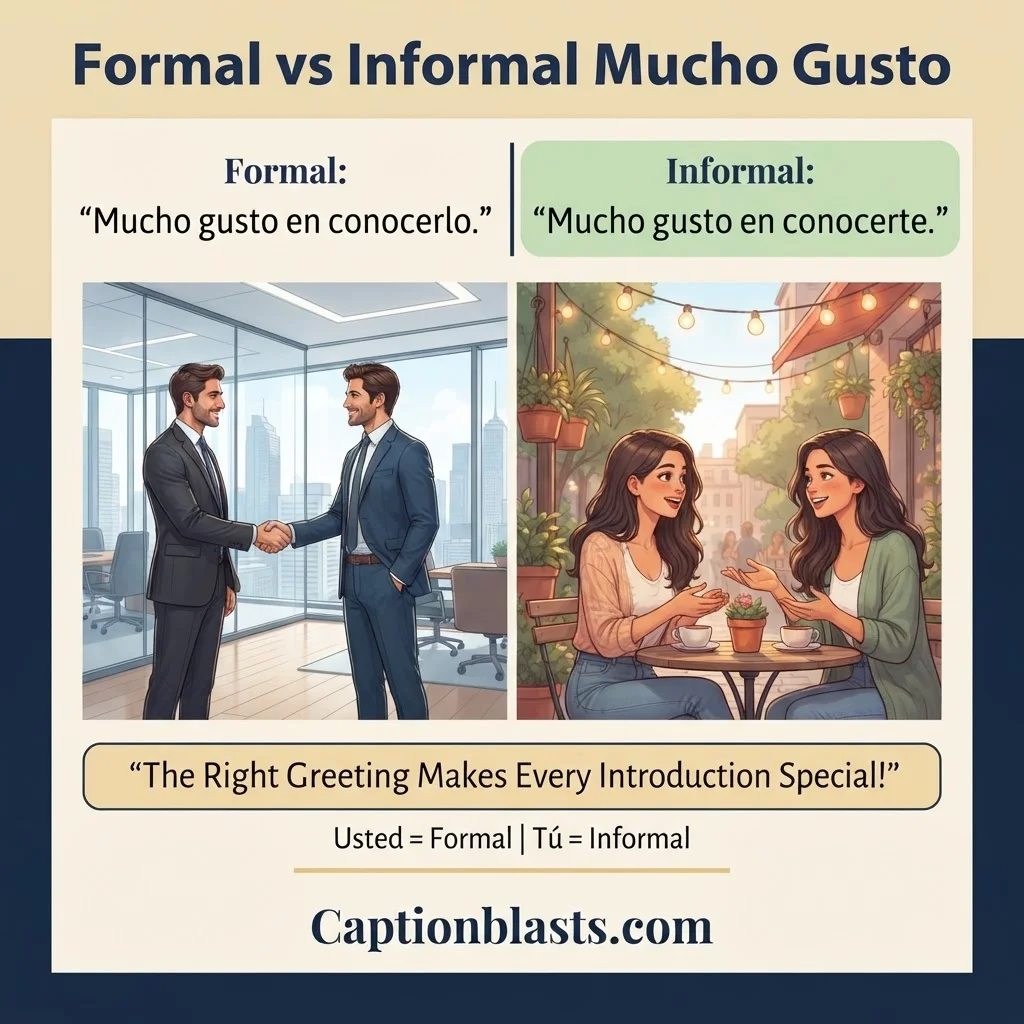
For a formal tone, add the longer form:
- Mucho gusto en conocerlo (to a man, formal)
- Mucho gusto en conocerla (to a woman, formal)
- Mucho gusto en conocerte (informal)
The choice follows tú (informal “you”) and usted (formal “you”). With older adults or in business, use the formal form.
You will also see it in text. People type it on WhatsApp, Instagram DMs, LinkedIn, and Facebook Marketplace. Lowercase, emojis, and exclamation points are all normal.
It is common across Mexico, Central America, South America, and Spain. In the US, it is part of daily life too. The Census Bureau found that about 37.6 million people spoke Spanish at home in 2011, nearly two-thirds of everyone who spoke a non-English language at home.
One regional note: in some countries, such as Costa Rica, mucho gusto can also mean “you’re welcome,” according to SpanishDictionary.com.
How to Respond to Mucho Gusto

The best reply is short and warm. The easiest reply is “igualmente,” which means “likewise.”
Standard replies:
- Igualmente. (Likewise.)
- Mucho gusto. (Say it back.)
- Mucho gusto también. (Nice to meet you too.)
- El gusto es mío. (The pleasure is mine.)
Warm replies:
- Encantado. (Delighted. Said by a man.)
- Encantada. (Delighted. Said by a woman.)
- Un gusto conocerte. (A pleasure to meet you.)
The ending of encantado or encantada follows the speaker, not the listener.
Professional replies:
- El gusto es mío.
- Es un placer conocerlo/la. (It’s a pleasure to meet you.)
Chat and DM replies:
- “Igualmente! 😊”
- “Mucho gusto! Welcome to the group.”
In English: say “Nice to meet you too” or “Likewise.”
Sample dialogue:
- Maya: “Hi, I’m Maya.”
- Carlos: “Mucho gusto, Maya.”
- Maya: “Igualmente!”
Mucho Gusto vs Con Mucho Gusto and Similar Phrases

Several Spanish phrases look alike, but each has its own job. This section sorts them out.
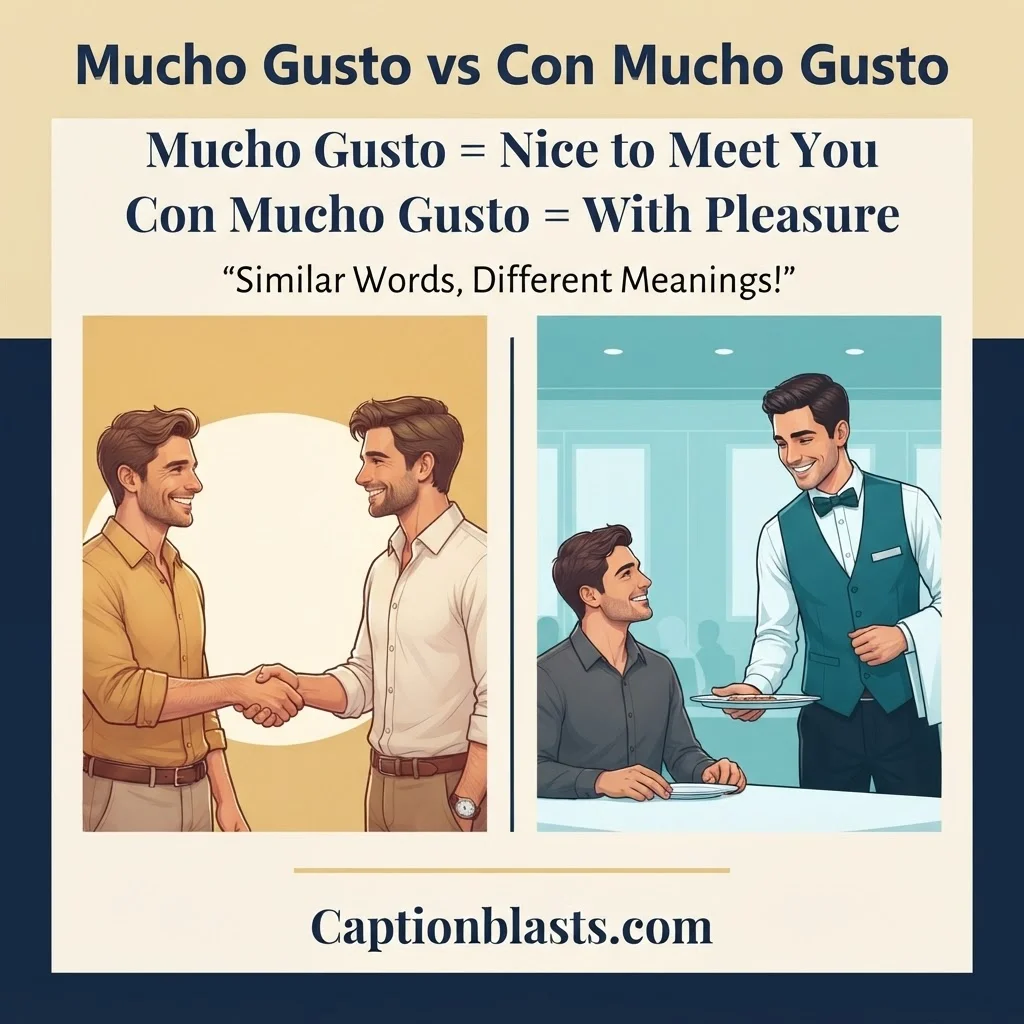
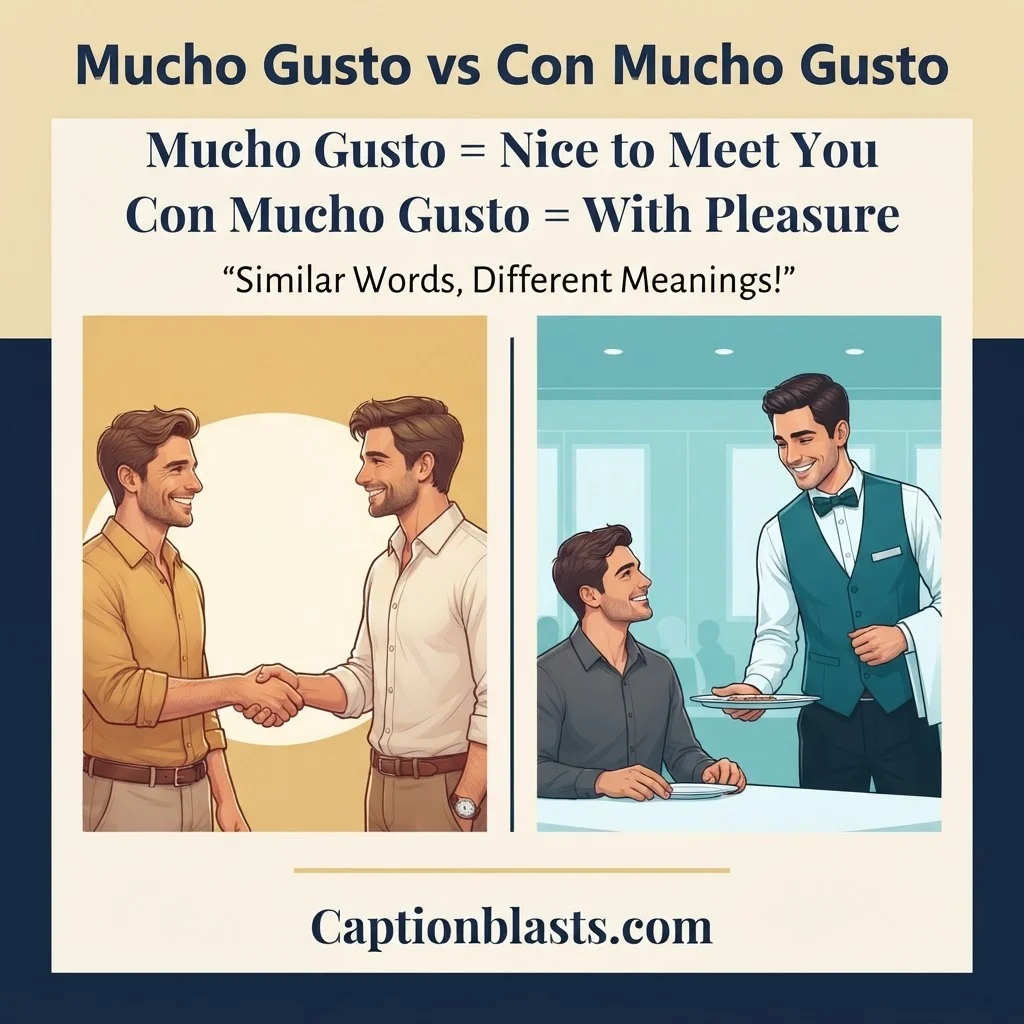
Mucho gusto vs con mucho gusto: the first means “nice to meet you.” The second means “with pleasure” or “gladly.” A waiter might say “con mucho gusto” after you say “gracias.”
| Phrase | Meaning | Best Use |
|---|---|---|
| Mucho gusto | Nice to meet you | First meetings |
| Con mucho gusto | With pleasure | Agreeing to help |
| Encantado / Encantada | Delighted | Warm introductions |
| Es un placer | It’s a pleasure | Formal settings |
| Un gusto | A pleasure | Quick, casual intros |
| Igualmente | Likewise | Replying to a greeting |
| El gusto es mío | The pleasure is mine | Polite replies |
| Hasta luego | See you later | Saying goodbye |
Hasta luego is a goodbye. Mucho gusto is a hello for first meetings. Do not swap them.
For other goodbyes, try adiós (goodbye) or fue un placer conocerte (it was a pleasure to meet you).
Common Mistakes to Avoid
A few small slips can make the phrase sound off. Here is how to fix each one.
- Using it as a goodbye. Say “hasta luego” or “adiós” instead.
- Using it with someone you already know. Say “hola” or “qué gusto verte” (so good to see you).
- Mixing up mucho gusto and con mucho gusto. Use “con mucho gusto” only for “gladly.”
- Getting encantado and encantada backward. Men say encantado. Women say encantada.
- Mispronouncing it. Say “MOO-choh GOOS-toh.”
- Overthinking the reply. “Igualmente” is enough.
FAQs
Is mucho gusto polite?
Yes. Mucho gusto is a polite, friendly greeting. It works in casual and formal settings. For extra respect, use “mucho gusto en conocerlo” or “mucho gusto en conocerla.”
What is hasta luego?
Hasta luego means “see you later” in Spanish. It is a goodbye, not a greeting. People say it when they expect to see each other again soon.
What is the literal meaning of mucho gusto?
The literal meaning of mucho gusto is “much pleasure” or “a lot of pleasure.” In English, people say “nice to meet you” instead.
How do you respond to “mucho gusto”?
The easiest reply is “igualmente,” which means “likewise.” You can also say “mucho gusto también” or “el gusto es mío.” In English, say “Nice to meet you too.”
Conclusion
Mucho gusto means “nice to meet you,” and “igualmente” is a safe reply every time. Now you know the mucho gusto meaning, how to say it, and how to respond with confidence.
CaptionBlasts.com Team is a group of passionate content creators and digital writers dedicated to helping people express themselves through creative and engaging captions.