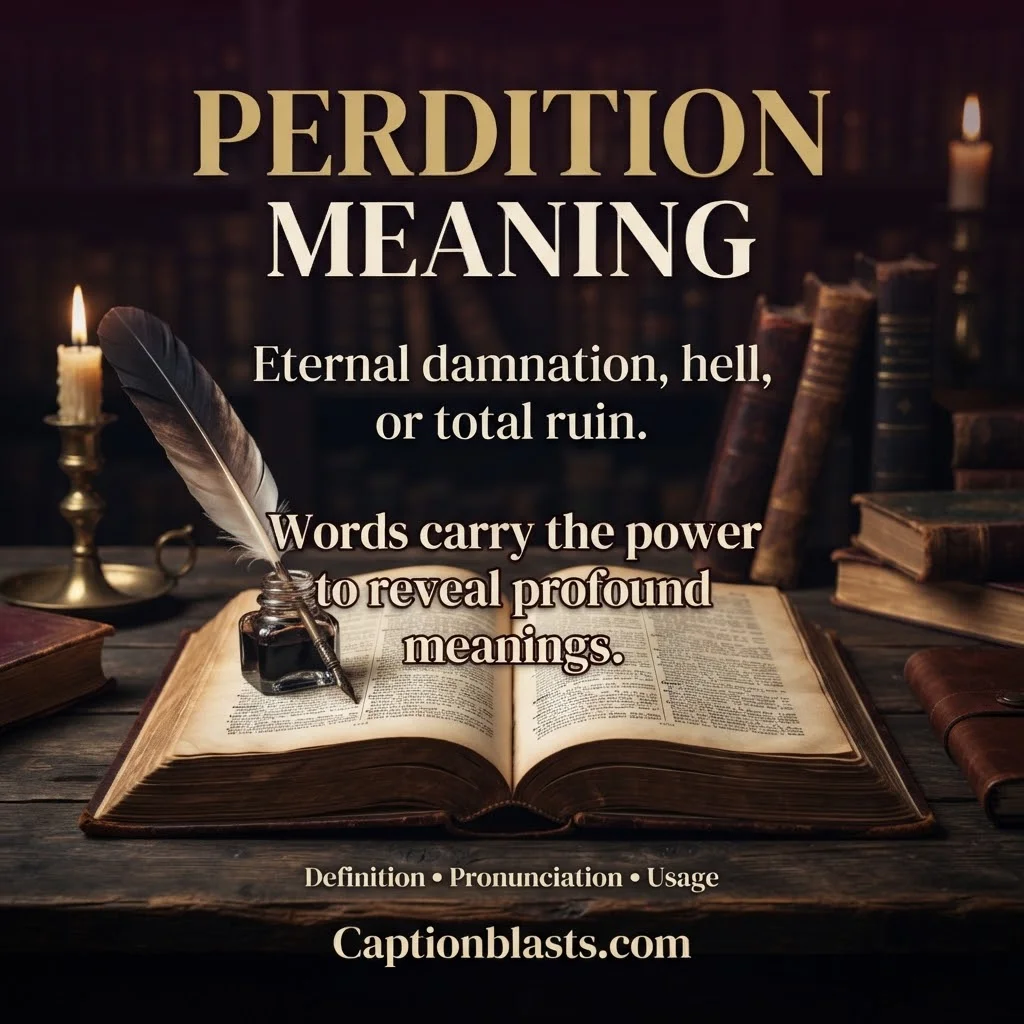
The perdition meaning is simple. It is a noun for eternal damnation, hell, or total ruin. This guide covers the definition of perdition, its origin, its Bible use, synonyms, and easy examples.
Table of Contents
What Does Perdition Mean?
Perdition sounds heavy, but the idea is easy to grasp. Here is the literal meaning of perdition and how people use it today.
Must visit: Touche Meaning: Powerful Definition, Origin, Pronunciation & Usage Explained
What does perdition mean? Perdition is a noun. It means eternal damnation, the loss of the soul, or hell itself. In older English, it also meant utter destruction.
Quick facts:
- Part of speech: noun
- Pronunciation: per-DISH-un (/pərˈdɪʃən/)
- Syllables: three, with stress on the second
- Tone: formal, literary, religious
Today, the word works in three ways:
- Religious sense: punishment that lasts forever after death
- Archaic sense: complete destruction or loss
- Figurative sense: a hopeless, miserable mess, often said with a wink
You will also see common phrases. A road to perdition (or path to perdition) is a run of bad choices that ends in ruin. The fires of perdition are the flames of hell. A slippery slope to perdition is a small slip that grows into a big fall.
Must visit: AFK Meaning: The Ultimate Guide to Its Definition, Uses & Examples
Perdition Origin and Biblical Meaning
The word is old. It came into English from Latin through French, and the Bible gave it much of its weight.
The perdition origin starts with the Latin verb perdere, which means “to destroy.” That verb blends per- (“through”) and dare (“to give”). It became Late Latin perditio, then Old French perdicion, then Middle English. Etymonline shows English writers using it by the mid-1300s. Early on, it meant damnation and general ruin alike. Over time, the religious sense took over.
Great writers kept the word alive. In Shakespeare’s Othello, a character cries, “Perdition catch my soul.” In John Milton’s Paradise Lost, rebel angels fall to “bottomless perdition.” Both uses are about soul-deep loss.
What does perdition mean in the Bible? Many English Bibles, such as the King James Version, use “perdition” for the Greek word apōleia. That word means destruction, ruin, or loss. Modern Bibles often say “destruction” instead.
Key verses include:
- John 17:12: the “son of perdition,” usually understood as Judas
- 2 Thessalonians 2:3: the “son of perdition” appears again
- Philippians 1:28: a sign of perdition for opponents of the faith
- 1 Timothy 6:9: greed can “drown men in destruction and perdition”
- Hebrews 10:39: a call not to “draw back unto perdition”
- 2 Peter 3:7 and Revelation 17:8: final judgment and ruin
Belief in this idea is common in the U.S. The Pew Research Center’s 2014 Religious Landscape Study found that 72% of American adults believe in heaven and 58% believe in hell. Among evangelical Protestants and members of historically Black Protestant churches, 82% believe in hell.
Perdition Synonyms and Antonyms
Many words sit close to perdition, but none match it exactly. Pick by tone and meaning.
Perdition synonyms, grouped by sense:
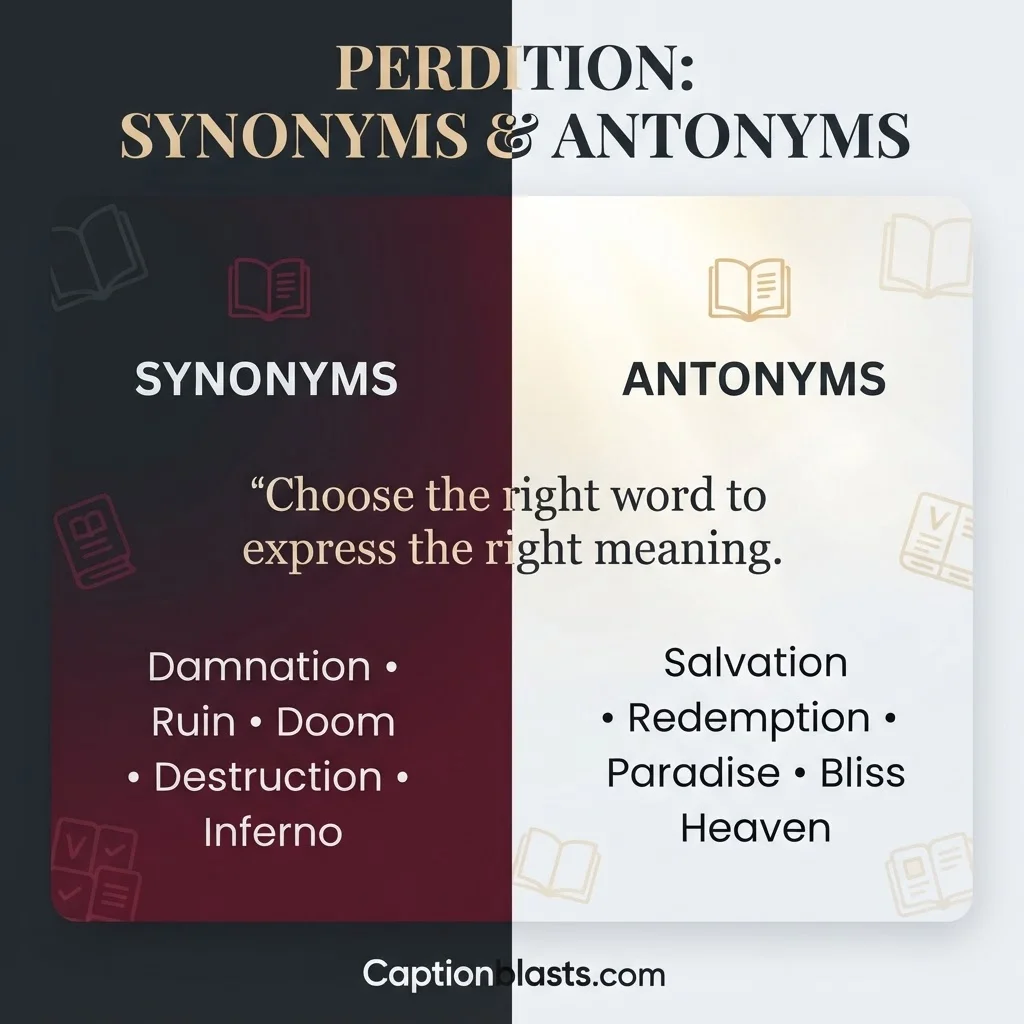
- Religious: hell, inferno, damnation, hellfire, Gehenna, Tartarus, Hades, Abaddon, the pit, the abyss
- Ruin and loss: destruction, doom, downfall, ruin
- Suffering: torment, anguish, agony, misery, ordeal
Perdition antonyms: heaven, paradise, bliss, salvation, Eden, Elysium, redemption, eternal rest.
Here is how perdition compares with similar words:
| Word | Core meaning | How long it lasts |
|---|---|---|
| Perdition | Eternal damnation or ruin | Forever |
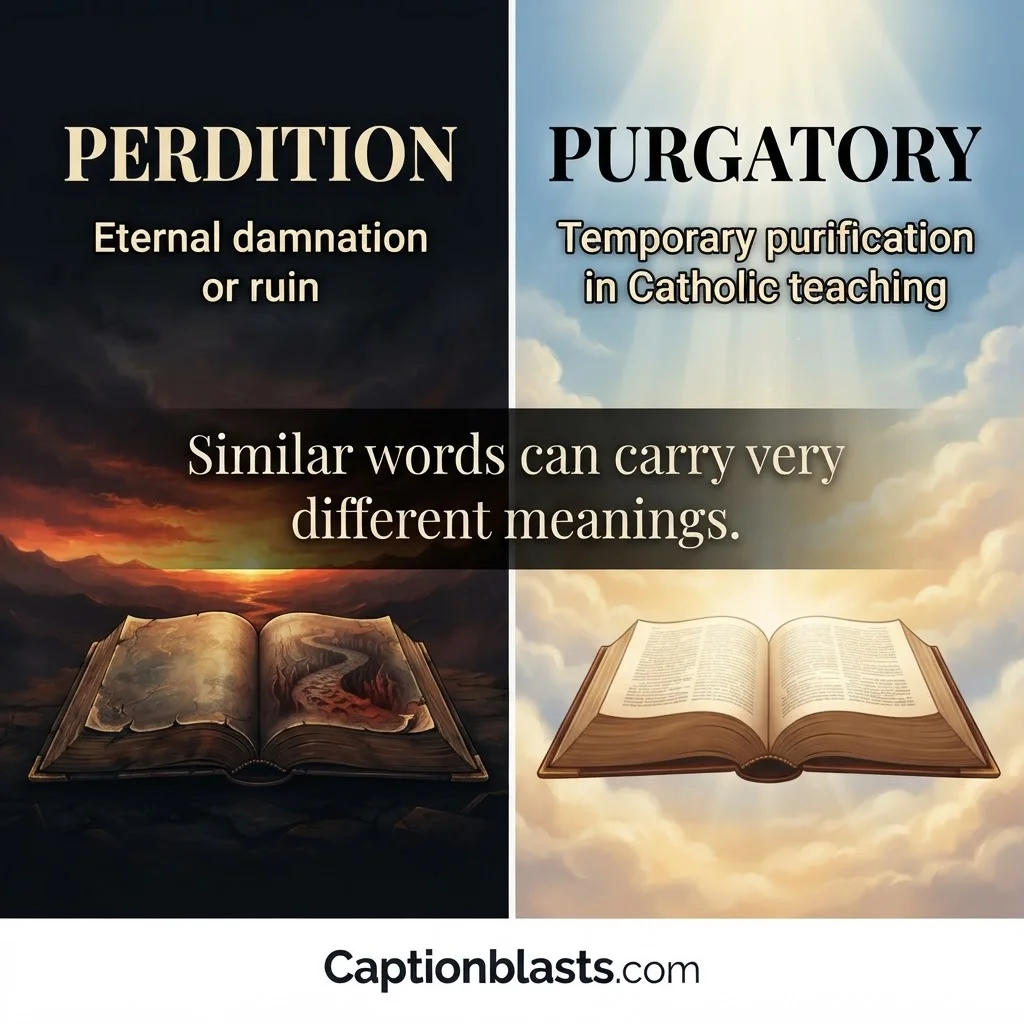
| Purgatory | Cleansing before heaven (Catholic teaching) | Temporary |
| Hell | Place of punishment | Forever, in most Christian teaching |
| Damnation | The sentence of condemnation | Forever |
| Limbo | A traditional Catholic idea, never defined as dogma | Not defined |
Is purgatory the same as perdition? No. The Catechism of the Catholic Church calls purgatory a “final purification” for those already saved. It says this is “entirely different from the punishment of the damned.” Perdition has no end. Many Protestant groups do not teach purgatory at all.
A simple tip: damnation is the verdict, while perdition is the state or place that follows.
Perdition in a Sentence: Examples and Usage

Seeing a word in action helps it stick. These examples show literal, literary, and everyday use.
How do you use perdition in a sentence? Use it where you would say “hell” or “total ruin.” Keep the tone serious or playful on purpose.
Religious use:
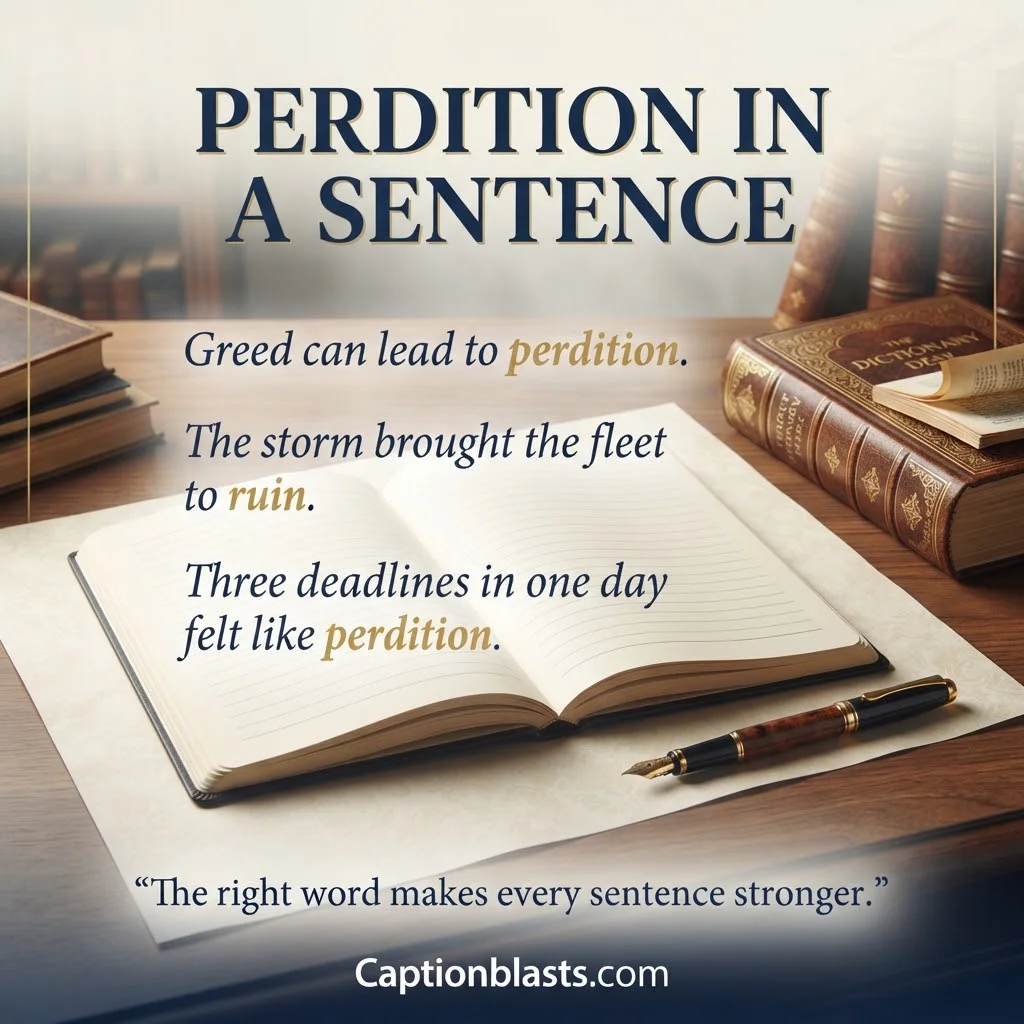
- The preacher warned that greed leads to eternal perdition.
- Sinners, he said, were headed for perdition without repentance.
Archaic and literary use:
- The storm brought the perdition of the entire fleet.
- Milton’s rebel angels tumble toward perdition.
Modern, figurative use:
- Three exams and one essay due on the same day felt like perdition.
- A broken heater in January is pure office perdition.
- Missing the last train, in the rain, with a dead phone? Perdition.
Pop culture helps too. The 2002 film Road to Perdition, directed by Sam Mendes and starring Tom Hanks, is based on a graphic novel by Max Allan Collins. The title plays on the phrase “road to perdition.”
Usage tips:
- Match the tone. It is a strong, formal word.
- Use it figuratively only with humor or on purpose.
- Do not mix it up with purgatory, which is temporary.
- Skip it for small annoyances in serious writing.
FAQs
What is the literal meaning of perdition?
Perdition literally means eternal damnation or hell. In older use, it meant utter destruction or loss. The word comes from the Latin perdere, “to destroy.”
Is purgatory the same as perdition?
No. Purgatory is a temporary cleansing before heaven in Catholic teaching. Perdition is eternal. The Catechism says purgatory is “entirely different” from the punishment of the damned.
How do you use perdition in a sentence?
Use it for hell or ruin. Example: “Sinners faced eternal perdition.” Figurative example: “Three deadlines in one day felt like perdition.”
What does perdition mean in the Bible?
In the Bible, perdition translates the Greek apōleia, meaning destruction or ruin. It appears in phrases like the “son of perdition” in John 17:12 and 2 Thessalonians 2:3.
Conclusion
Perdition means eternal damnation, hell, or utter ruin, and it also works as a bold figurative word. Now you know its meaning, origin, Bible use, synonyms, and how to use it. Try it in a sentence today.
CaptionBlasts.com Team is a group of passionate content creators and digital writers dedicated to helping people express themselves through creative and engaging captions.