Zvodeps is a word you’ve probably never heard until recently — and that’s exactly the point. It’s showing up in creative communities, remote work forums, and productivity circles without one fixed definition. This guide breaks down what people mean by it, how it’s used, and whether it deserves to be called a tool, a mindset, or just a passing trend.
Here’s the short answer: Zvodeps isn’t a registered product or piece of software. It’s an informal name for a flexible way of working — part planning, part improvisation — that’s gaining traction because rigid, old-school project management doesn’t fit how people actually create and collaborate anymore.
Table of Contents
What Is Zvodeps
Zvodeps describes a loose framework for balancing structure with spontaneity. Instead of locking a project into a fixed plan, people using this approach set a rough direction and adjust as they go.
The term has no dictionary entry. It lives in online communities, Slack threads, and creative circles — which is common for language that starts organically rather than from a company’s marketing team.
Three ways people apply the word show up most often:
- As a workflow method — a loose system for managing tasks
- As a mindset — a way of thinking about creative freedom versus rigid rules
- As a cultural label — shorthand for a broader shift toward flexible, remote-friendly work
All three uses overlap. That overlap is exactly why the definition feels slippery.
Is Zvodeps a Tool, Philosophy, or Trend
This is the question most explainers skip. Here’s a clear answer.
As a tool, Zvodeps isn’t software you download. People borrow existing platforms — Notion, Trello, Asana — and apply Zvodeps-style thinking on top of them.
As a philosophy, it holds up better. It reflects a belief that creativity suffers under too much rigid process, a view shared by researchers studying autonomy in the workplace. Studies on employee autonomy, including work published through Gallup’s workplace research, consistently link higher autonomy to higher engagement — which lines up with what Zvodeps advocates argue.
As a trend, it fits a bigger pattern: the rise of asynchronous work, remote-first teams, and no-code culture. Zvodeps didn’t create this shift — it’s a symptom of it.
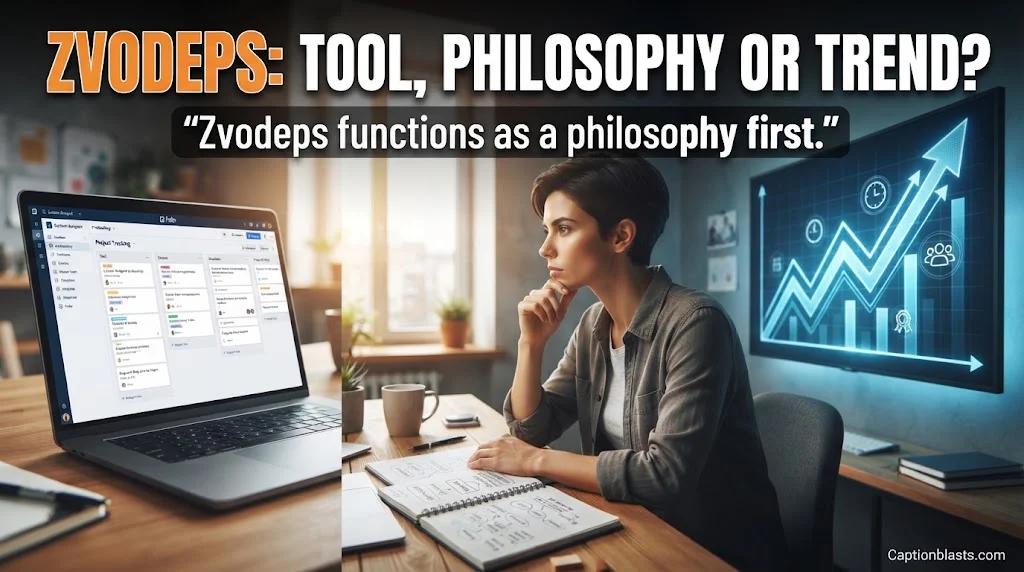
Bottom line: Zvodeps functions as a philosophy first, expressed through tools, and amplified by a broader workplace trend.
How Zvodeps Works in Practice
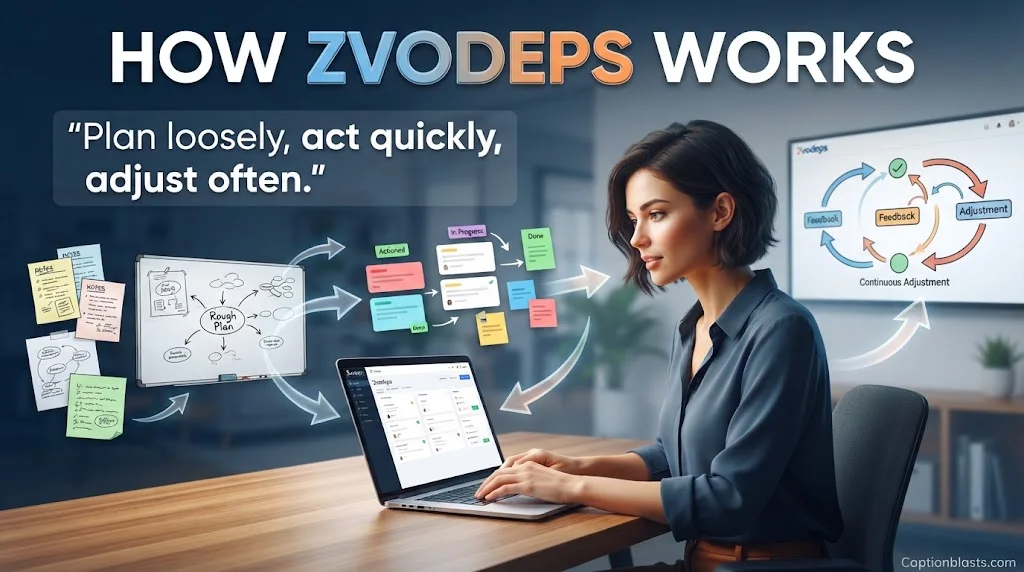
Zvodeps isn’t complicated. It follows a simple rhythm: plan loosely, act quickly, adjust often.
A project starts with a rough outline — not a rigid roadmap. Teams sketch a direction, then let the details form as work happens. This mirrors principles found in Agile software development, which also favors iteration over upfront perfection.
The difference is scope. Agile is a formal methodology with defined roles like scrum master and sprint cycles. Zvodeps has none of that structure. It’s Agile’s more relaxed, less official cousin.
Here’s where it shows up:
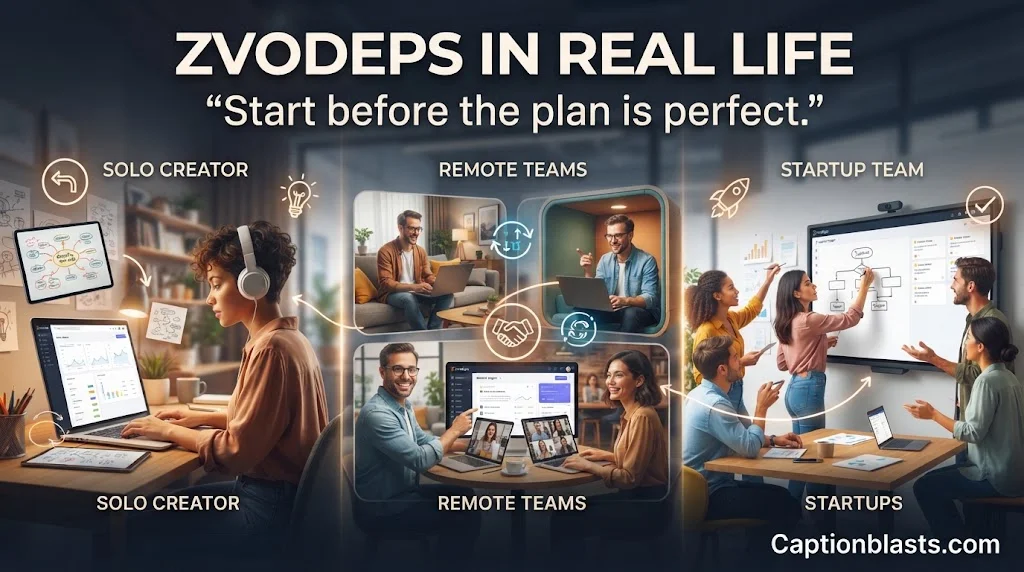
- Solo creators use it to avoid over-planning projects before starting
- Remote teams use it to stay aligned without constant meetings
- Startups use it because rigid processes slow down fast-moving decisions
Must Visit: WTW Meaning: What Does This Popular Slang Actually Stand For?
Benefits and Limitations of Zvodeps
Every approach has trade-offs. Zvodeps is no exception.
Benefits people report:
- Less time lost to over-planning
- Faster pivots when circumstances change
- Better fit for distributed teams across time zones
- Reduced burnout tied to rigid deadlines, a factor supported by research from the American Psychological Association linking excessive workplace rigidity to stress
Limitations worth knowing:
- No formal training or certification exists — unlike PMP or Scrum Master credentials
- Large organizations with strict compliance needs may struggle to adopt it
- Without discipline, “flexible” can quietly turn into “directionless”
Skepticism mostly comes from enterprise IT teams and traditional project managers, who point out that flexibility without any documentation can create accountability gaps.
Zvodeps in 2026 and What Comes Next
Interest in Zvodeps lines up with several confirmed workplace shifts happening right now.
Remote and hybrid work remain permanent fixtures for many U.S. companies, according to ongoing surveys from Pew Research Center tracking work-from-home trends. No-code and low-code tools are also expanding fast, per Gartner’s market forecasts, giving non-technical teams more control over their own workflows — a trend that fits naturally with Zvodeps-style thinking.
There’s no dedicated Zvodeps app on the horizon, and that’s likely by design. The concept spreads through word of mouth, not software releases.
If you want to try it:
- Pick one project and write a loose outline, not a detailed plan
- Set short check-in points instead of long-term deadlines
- Let your team adjust the plan openly, without needing formal sign-off
FAQs
What does Zvodeps mean?
Zvodeps refers to a flexible approach to work that blends loose planning with room for spontaneous change. It has no official dictionary definition.
Is Zvodeps a real tool or software?
No. Zvodeps is not a product. People apply its principles using existing tools like Notion or Trello.
Is Zvodeps a philosophy or a productivity method?
It works as both. At its core, it’s a philosophy about creative freedom, expressed practically through flexible productivity habits.
How is Zvodeps different from Agile?
Agile is a formal, structured methodology with defined roles and rituals. Zvodeps is informal, with no certification, roles, or fixed rules.
Will Zvodeps become mainstream?
That depends on whether it stays a grassroots idea or gets adopted into formal business language. Its growth tracks closely with remote work and no-code trends already reshaping U.S. workplaces.
Conclusion
Zvodeps isn’t a mystery once you strip away the buzzword. It’s a flexible way of working that favors direction over rigid rules — part mindset, part method, and a reflection of how work culture keeps shifting toward autonomy and adaptability.
CaptionBlasts.com Team is a group of passionate content creators and digital writers dedicated to helping people express themselves through creative and engaging captions.