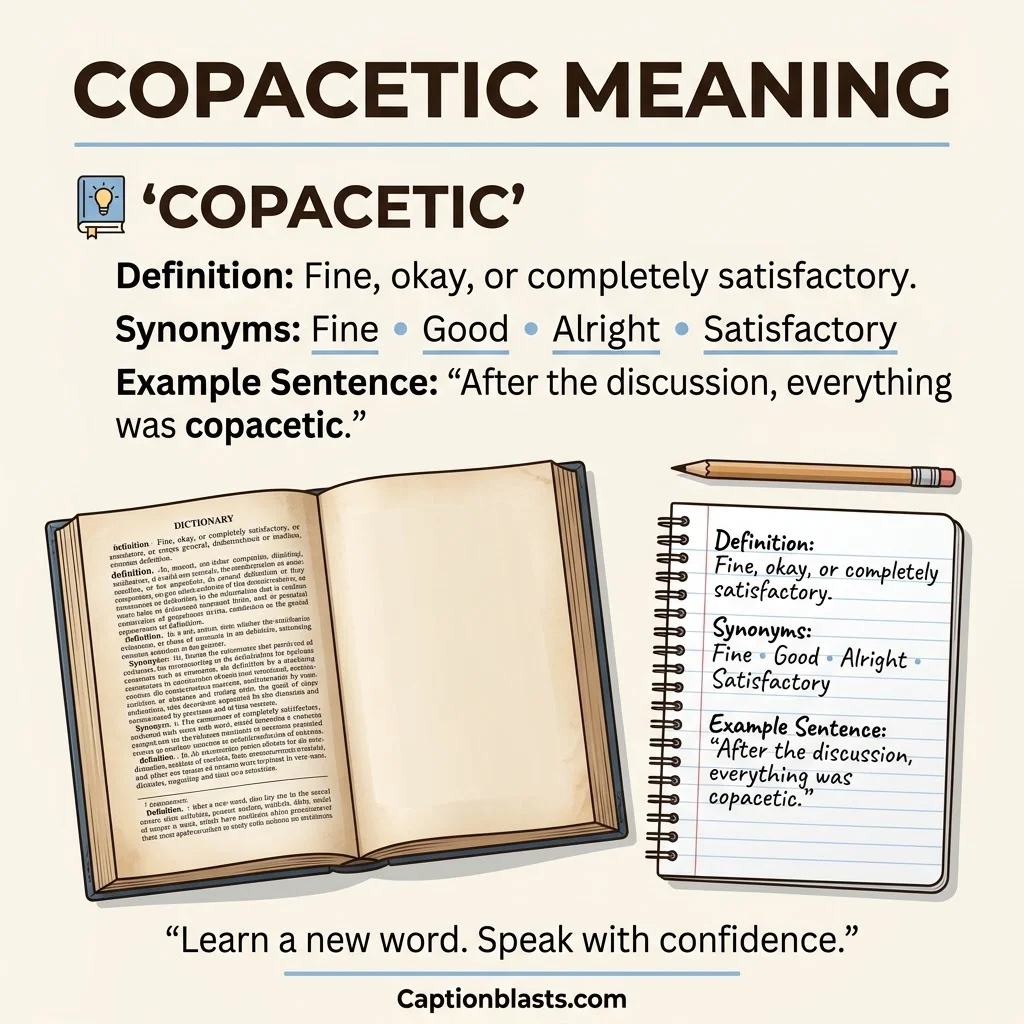
Copacetic means fine, OK or completely satisfactory. This guide covers the copacetic meaning, its odd history, its synonyms and easy examples you can use today.
Table of Contents
What Does Copacetic Mean?

The copacetic meaning is simple: “very satisfactory.” It is an adjective that says things are fine and nothing is wrong.
Must visit : AFK Meaning: The Ultimate Guide to Its Definition, Uses & Examples
Think of it as a relaxed way to say “all good.” A dictionary usage note describes it as a slang word for a situation, mood or relationship without problems.
It is informal and a bit old-fashioned. It shows up more in American English than British English, and it rarely appears in formal or academic writing.
Three spellings are in use. Copacetic is the standard form. Copasetic and copesetic are less common variants.
The pronunciation has four syllables: koh-puh-SET-ik. The stress lands on the third syllable.
You can use it for more than moods. It can describe a group vibe, a friendship, a plan or even the harmony in a song. The feeling runs from “just fine” to “excellent.”
Copacetic Origin and Word History

The copacetic origin is a real puzzle. Word historians call it obscure, which means no one knows for sure where it came from. Understanding the copacetic meaning helps you appreciate how simple words can express comfort, happiness, and positive feelings. Similarly, exploring the [cariño meaning] reveals a beautiful Spanish expression of love, warmth, and affection that adds a personal touch to everyday conversations.
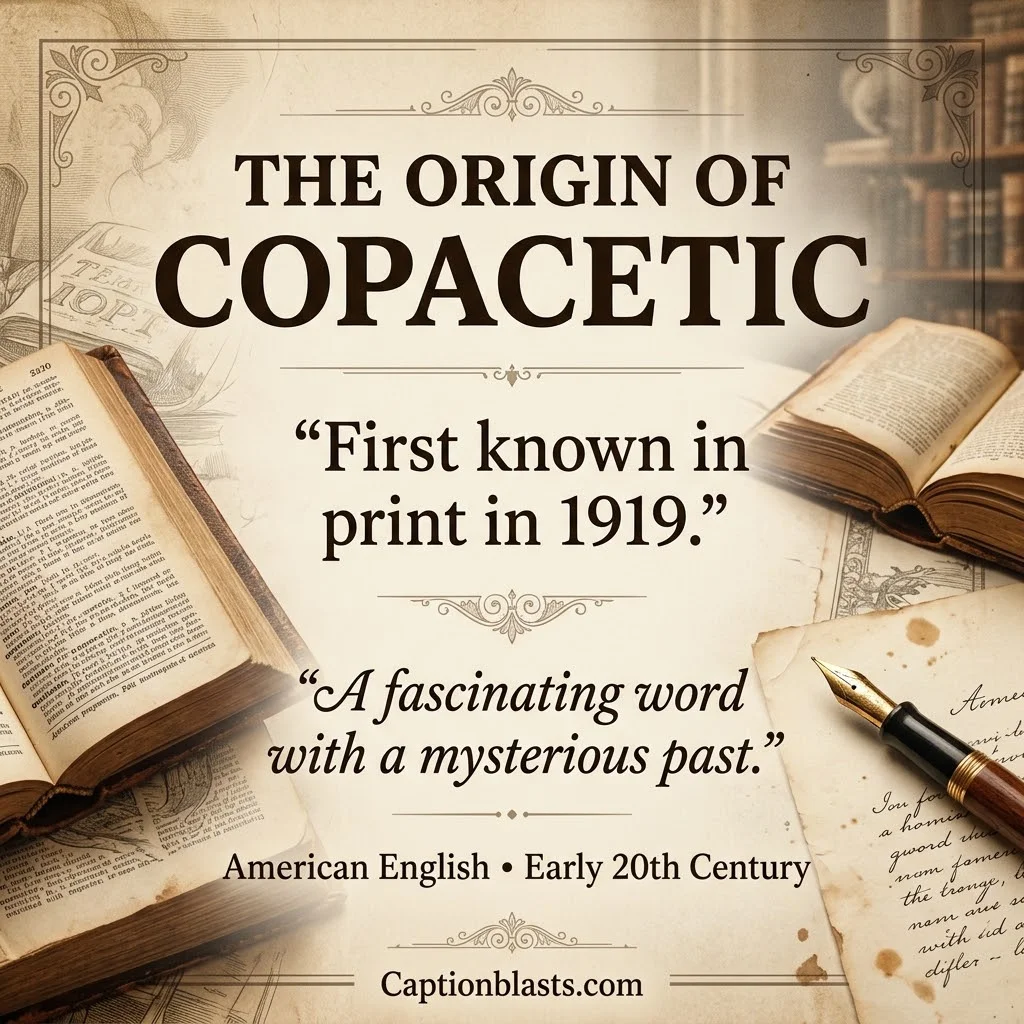
The first known use is from 1919. It appears as “copasetic” in the novel A Man for the Ages by Irving Bacheller, a story about a young Abraham Lincoln. A character uses the word as a special, prized term (word history note).
The word next shows up in a 1920 song lyric by the songwriters Tom Delaney and Sidney Easton. Ethel Waters recorded the song in 1921. That gives the word a long link to African American speech.
In the 1930s, tap dancer Bill “Bojangles” Robinson used the word on the radio. He said he made it up. But the word was already in print years earlier.
People have guessed at many sources. These include Louisiana French, Chinook Jargon, Italian and Hebrew. None of these guesses has solid proof.
The Hebrew idea is the best known. It says the word comes from hakol beseder, meaning “all is in order.” Linguist David Gold answered this theory in a 2009 study. The dictionary history note calls the idea “beyond improbable.”
Today, the best answer is simple. It is an Americanism from the early 20th century, and its true etymology is still unknown.
Copacetic Synonyms and Similar Words

Many plain words can replace copacetic. Pick the one that fits your tone.
- Fine and OK are the closest everyday matches.
- Alright and all good sound casual and friendly.
- Satisfactory and agreeable sound a little more formal.
- Good, great and wonderful add more warmth.
- Excellent, outstanding and perfect show top praise.
You can also use fun idioms with a similar feel. Hunky-dory and life of Riley both suggest things are going well. Easy street points to a smooth, carefree stretch of life.
What about the opposite? Antonyms include troubled, off, unsatisfactory and not right. Someone might say, “Things are not quite copacetic.”
Copacetic Examples and How to Use It
The best way to learn copacetic in a sentence is to see it at work. Here are ten fresh examples for everyday life.
- The flight was late, but the hotel check-in was copacetic.
- My boss read the report and said it all looked copacetic.
- After a quick chat, things between the two friends felt copacetic again.
- The room was quiet, the coffee was hot and everything was copacetic.
- Don’t worry about the party. The food, the music and the guests are all copacetic.
- The band hit the last chord, and the harmony was copacetic.
- I’m copacetic with moving the meeting to Friday.
- Her text read, “Landed safe. All copacetic.”
- The coach checked the field and said the game was a go. Everything was copacetic.
- The kids packed their bags and the van was ready. We were copacetic.
The best-known phrase is everything is copacetic. It means “everything is fine.” People use it to calm worries when a problem seemed possible.
Use it in casual talk, texts and friendly emails. Skip it in a legal paper, a research essay or a formal report. In those places, choose “satisfactory” or “in good order.”
Two slips are common. People overuse it, and people use it for things that are not fine. Keep it for moments when things really are okay.
FAQs
Why is copacetic slang?
It is slang because it is an informal word with an unknown origin. It grew from casual speech, not formal writing. Dictionaries label it as slang, and it is thought to have started in casual Southern speech.
Can I say I am copacetic?
Yes, in casual talk. Dictionaries mostly show it describing situations, moods and relationships, like “things are copacetic.” You can also say, “I’m copacetic with that plan,” meaning you are fine with it. Avoid it in formal writing.
What is another word for copacetic?
Common synonyms include fine, OK, alright, satisfactory, good, great and excellent. “Hunky-dory” is a fun idiom with a similar feel. Choose the word that matches your tone.
Is copacetic Yiddish?
No. The word is not Yiddish. A dictionary word-history note says it has no Hebrew, Yiddish or other Jewish connection. Its true origin remains unknown.
Conclusion
In short, copacetic means fine and satisfactory, with a mysterious past and a relaxed, informal feel. Use it in casual talk to say all is well, and everything will stay copacetic.
CaptionBlasts.com Team is a group of passionate content creators and digital writers dedicated to helping people express themselves through creative and engaging captions.