
Cariño meaning: it is a Spanish word for warm, gentle affection. It also works as a term of endearment, like “honey” or “dear.”
English has no single word for it. It sits between “like” and “love,” so most translations feel a little off. Here is what it means, how to use it, and when it sounds just right.
Table of Contents
What Does Cariño Mean in English?
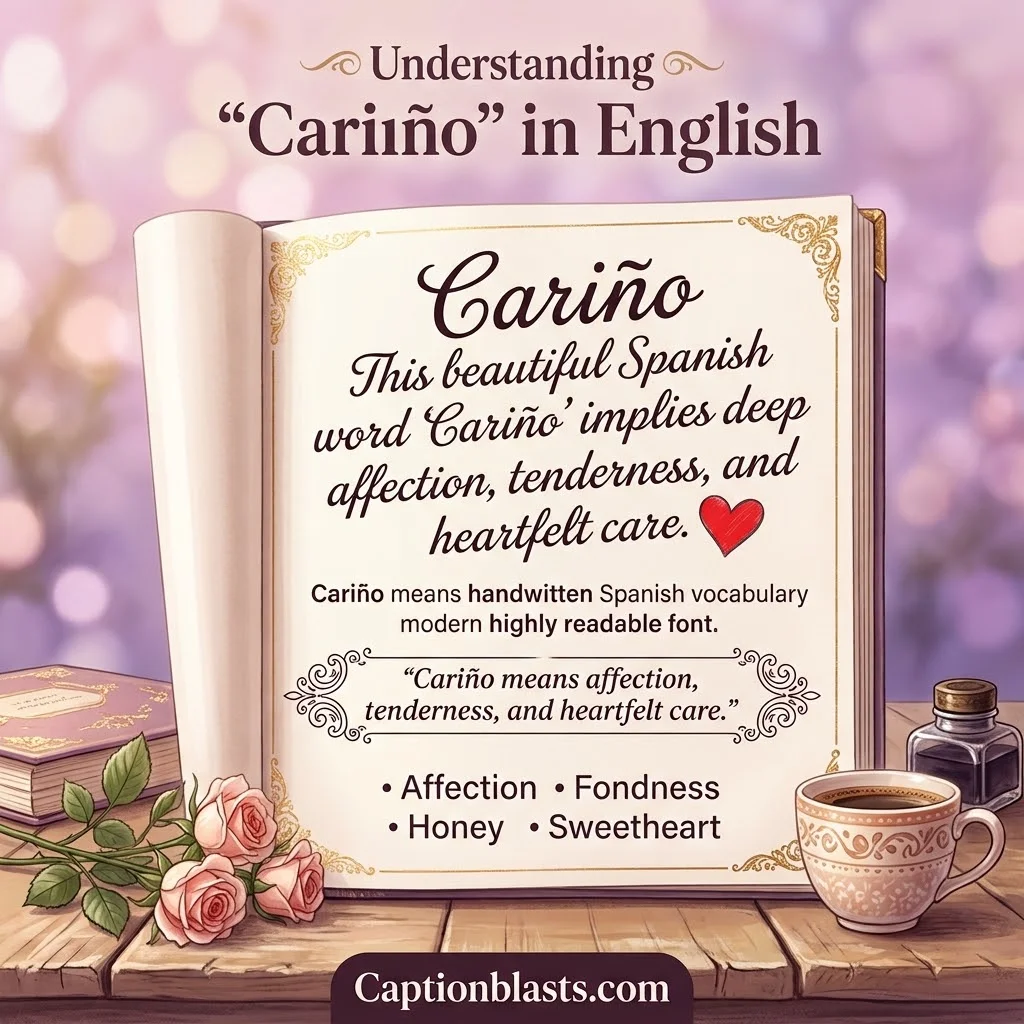
Cariño meaning in English is affection, fondness, or tender care. The Royal Spanish Academy defines it as a feeling of love or attachment toward a person or thing. It also covers showing that feeling.
Close English matches include affection, fondness, tenderness, “honey,” “dear,” and “sweetheart.” None of them covers the whole word on its own. Exploring the meaning of cariño shows how language can express warmth, affection, and positive emotions. If you enjoy discovering interesting words, understanding the [copacetic meaning] can help you describe situations when everything feels fine, peaceful, and just right.
Think of a love scale. Cariño is warmer than “like.” It is softer than passionate love. That gentle middle ground is why people find it so hard to translate.
It fits many people:
- partners and spouses
- children and grandchildren
- close friends
- pets
- places or objects you feel fond of
How do you pronounce cariño? Say kah-REE-nyoh. The ñ sounds like the “ny” in “canyon.”
How do you type ñ? Hold the N key on an iPhone or Android. On a Mac, press Option + N, then N. On Windows, hold Alt and type 0241 on the number pad.
Is it cariño or carino? The ñ matters. In Spanish, it is cariño. In Italian, carino means “cute,” “pretty,” or “nice.” Same look, different word.
A few related words help:
- Cariñoso/a means affectionate.
- Cariñito is a smaller, sweeter form.
- Encariñarse means to grow fond of someone.
- Tener cariño means to feel affection for someone.
How to Use Cariño in Spanish

You can use cariño as a name, a feeling, or a way of doing things. The examples below show each one. Spanish is the second most spoken language at home in the US, with about 42 million speakers, so you will hear these phrases often. Understanding Spanish words like cariño can make everyday conversations feel warmer and more meaningful. Similarly, knowing common English abbreviations, such as ETA meaning, can help you communicate clearly when discussing arrival times, travel plans, or deliveries.
As a pet name:
- “Hola, cariño.” (Hi, honey.)
- “¿Cómo estás, cariño?” (How are you, dear?)
To show fondness:
- “Le tengo mucho cariño.” (I’m very fond of him or her.)
- “Le tenemos cariño a este barrio.” (We feel affection for this neighborhood.)
For things done with love:
- “Lo hice con mucho cariño.” (I made it with lots of love.)
For support and sympathy:
- “Te mando mi cariño.” (I’m sending you my love.)
For a warm welcome:
- “Los recibimos con todo cariño.” (We welcome you with all our affection.)
Tone by relationship matters. Here is a quick guide:
- Partner: sweet and natural.
- Child or grandchild: very common and tender.
- Friend: warm, if you’re close.
- Coworker: better to skip, unless the culture is very friendly.
- Stranger: can sound too familiar.
The word is common across Spain and Latin America. In bilingual homes in the US, it often shows up in everyday talk and text messages.
Other pet names feel different. “Mi amor” is more romantic. “Mi vida” means “my life” and is very loving. “Mi cielo” is “my heaven.” “Corazón” is “heart.” Cariño is gentler and fits more situations.
Con Cariño Meaning: Sign-Offs, Cards, and Text Messages

Con cariño meaning is “with affection” or “with love.” It is a warm way to end a card or note. It is not always romantic.
Use it on:
- greeting cards
- letters and emails
- gift tags
- sympathy notes
- text messages
Here is a sign-off ladder from lighter to stronger:
- Con cariño: warm and kind.
- Con mucho cariño: very warm.
- Con todo mi cariño: with all my affection.
- Cariñosamente: affectionately.
- Con amor: with love, and stronger.
Copy-ready examples:
- For a friend: “Gracias por todo. Con cariño, Ana.” (Thanks for everything. With affection, Ana.)
- For a teacher: “Con cariño y gratitud.” (With affection and gratitude.)
- For a grandparent: “Te quiero mucho, abuela. Con todo mi cariño.” (I love you so much, Grandma. With all my affection.)
- For a partner: “Buenas noches, mi cariño.” (Good night, my darling.)
- For a coworker: “Que te mejores pronto. Con cariño.” (Get well soon. With affection.)
- For a sympathy card: “Te mando mi cariño en estos momentos difíciles.” (I’m sending you my love in these hard times.)
Short texts work well too:
- “Pensando en ti, con cariño.” (Thinking of you, with affection.)
- “Un abrazo con cariño.” (A hug with affection.)
- “Gracias, cariño.” (Thanks, honey.)
For formal or work emails, “cordialmente” is safer. Save “con cariño” for people you know.
Is Cariño Romantic? Gender, Etiquette, and Common Mistakes

Is cariño romantic? It can be. But it is also used for family, kids, and friends. Tone and closeness tell you which one it is.
Gender: Cariño is a masculine noun. People use it for men, women, and kids alike. The form cariña is rare as a pet name. The adjective changes: cariñoso for a man, cariñosa for a woman.
Etiquette tips:
- Match the word to how close you are.
- Skip it with people you just met.
- Remember that some people may find it too forward from a stranger.
Common mistakes English speakers make:
- Writing “carino” without the ñ.
- Thinking it is only romantic.
- Using it as a greeting for everyone.
- Mixing it up with the Italian carino.
Quick do’s and don’ts:
- Do use it with people you’re close to.
- Do add “mucho” to make it warmer.
- Do keep the ñ.
- Don’t use it at work with new colleagues.
- Don’t use it to flirt with strangers.
- Don’t assume it means “I love you.” It means “I care for you.”
FAQs
Can I call my boyfriend Carino?
Yes. Say it as cariño, with the ñ. It is a sweet pet name, and it works for any gender. If you want something more romantic, “mi amor” is a good choice.
Does cariño mean darling?
Often, yes. “Darling,” “honey,” and “dear” are common translations when cariño is used as a pet name. The fuller meaning is affection and fondness.
Is Carino for boys or girls?
Both. It is a masculine noun, but people use it for anyone. Only the adjective cariñoso/cariñosa changes with gender.
Is con carino romantic?
Not always. It means “with affection” and fits friends, family, and partners. “Con amor” feels stronger and more romantic.
Conclusion
Cariño is a small word with a big heart. Use it with people you care about, keep the ñ, and let your tone do the rest. Try one phrase today, and you will see how much warmth a single word can carry.
CaptionBlasts.com Team is a group of passionate content creators and digital writers dedicated to helping people express themselves through creative and engaging captions.