Goodfella is US informal slang for a Mafia member or gangster. The word joins “good” and “fella.”
In this guide Goodfella Meaning Explained, its Mafia origins, and the true story behind the famous film. You’ll also get real examples and tips for using the word with care.
Table of Contents
What Does Goodfella Mean? Definition and Word Origin
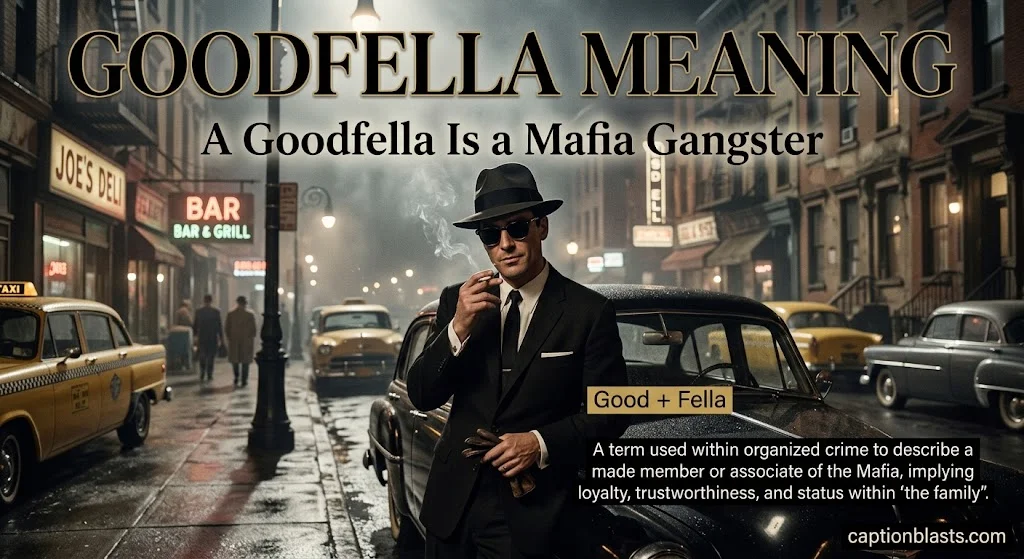
Goodfella is a noun in informal US English. It names a Mafia gangster.
Quick answer: A goodfella is a mobster. Dictionary entries list it as “a Mafia gangster” and say the word was popularized by the 1990 crime film.
The word is simple to break down:
- Good means decent or skilled.
- Fella is a casual form of “fellow.” It means a man or boy, according to Dictionary.com.
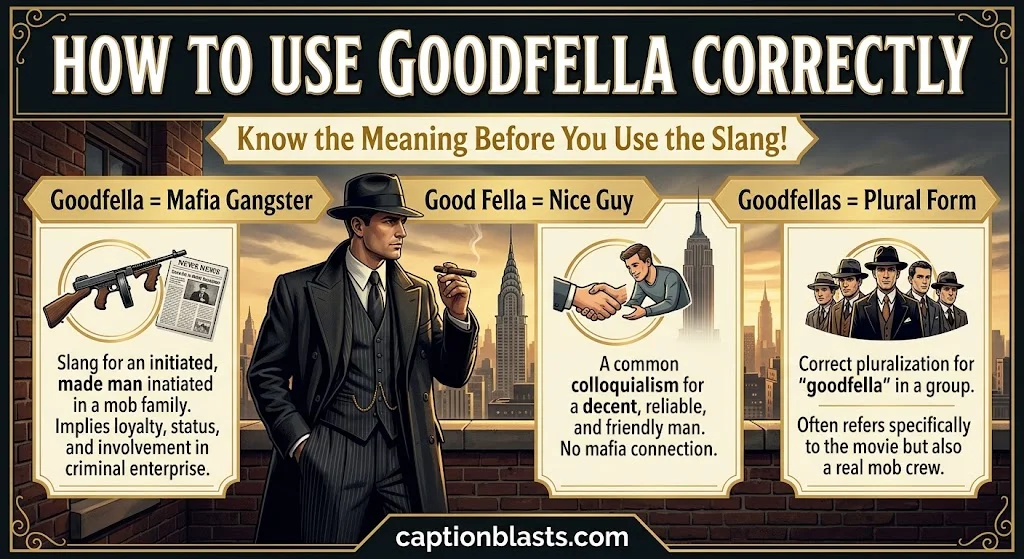
- Goodfellas is the plural form.
Crime-related slang like “goodfella” often appears in movies and stories that explore secrecy, curiosity, and human behavior. Understanding the meaning of voyeurism offers another perspective on how privacy, observation, and psychology influence real-life situations.
Goodfella vs. good fella: These are not the same. Goodfella Meaning Explained.
- Goodfella (one word) is slang for a mobster.
- Good fella (two words) can just mean a nice guy.
- GoodFellas (capital F, with an S) is the film title.
Goodfella Slang and Mafia Origins
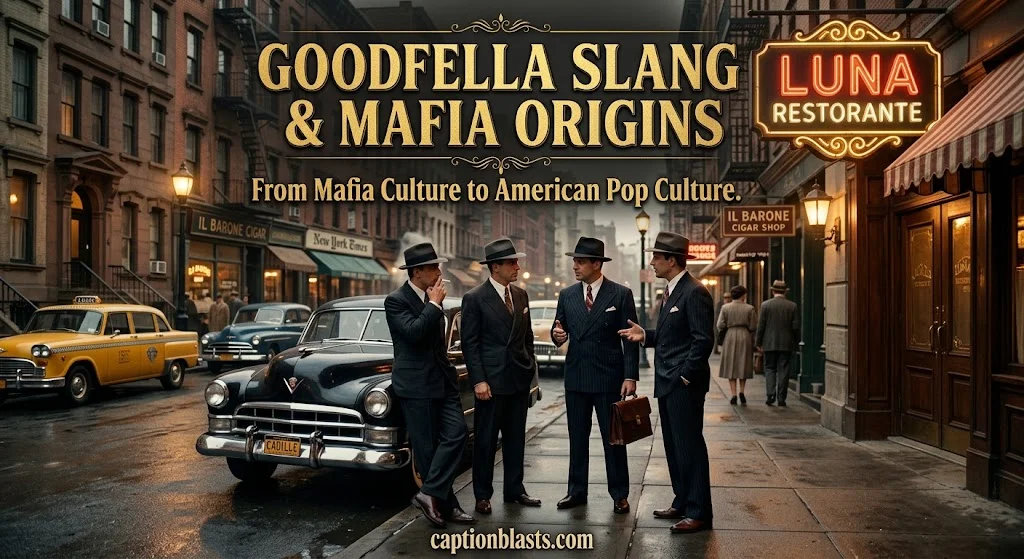
The slang comes from organized crime culture. It grew through books, films, and everyday jokes.
In real life, mobsters used the word wiseguy far more than goodfella. Film historians note that “wiseguys” is Mafia slang for gangsters. That is also why the book behind the film is called Wiseguy.
Just as “goodfella” became widely recognized through Mafia movies and American pop culture, other slang terms have evolved from street culture into everyday conversations. One interesting example is the meaning of glizzy, a word that originated in hip-hop slang before becoming a viral TikTok term for hot dogs.
So the word’s popularity is partly a naming accident. Pop culture made it stick.
Here is how related terms differ:
| Term | Simple meaning | Feel |
|---|---|---|
| Goodfella | Mafia member | Slangy, film-linked |
| Wiseguy | Mob insider | Classic mob slang |
| Mobster | Member of a criminal gang | Neutral, news style |
| Gangster | Member of an organized crime group | General |
| Made man | Fully accepted Mafia member | Insider term |
Today, people also use goodfella loosely. Some call any tough guy a goodfella. That is a common misuse. The word best fits organized crime and the film.
Goodfellas Movie and the True Story Behind It
Most people learn this word from the movie. The film is based on a real person and a real book.
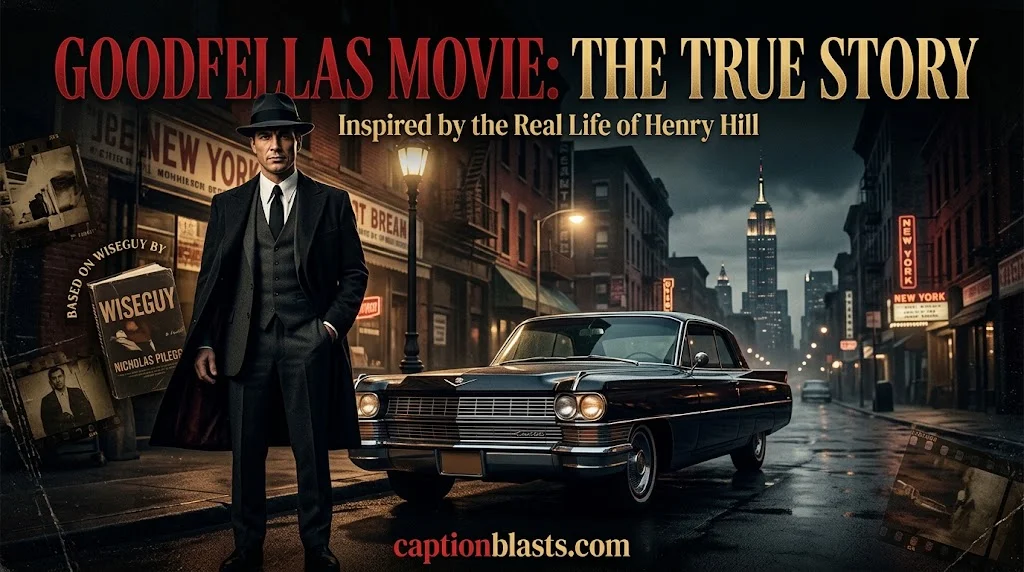
GoodFellas came out in 1990 and was directed by Martin Scorsese. Britannica says it is based on the true story of New York mobster Henry Hill. The source is Nicholas Pileggi’s 1985 book Wiseguy: Life in a Mafia Family.
The film covers the years from 1955 to 1980. It follows Hill from his teen years as an errand boy for a caporegime in the Lucchese crime family to his 1980 arrest for cocaine trafficking.
The film earned lasting respect. In 2000, it was inducted into the National Film Registry of the U.S.
Key names to know:
- Henry Hill, the real mobster behind the story
- Nicholas Pileggi, author of Wiseguy
- Martin Scorsese, director
- Ray Liotta, who played Henry Hill
What is true, and what changed? The film gets the basics right. But filmmakers changed small details. For example, the movie shows Hill with two daughters. In real life, he had a son and a daughter. Some names were also changed.
That is normal for films based on real events. Expect the core story to be true and the finer details to be adjusted.
Goodfella Examples in Real-Life Use
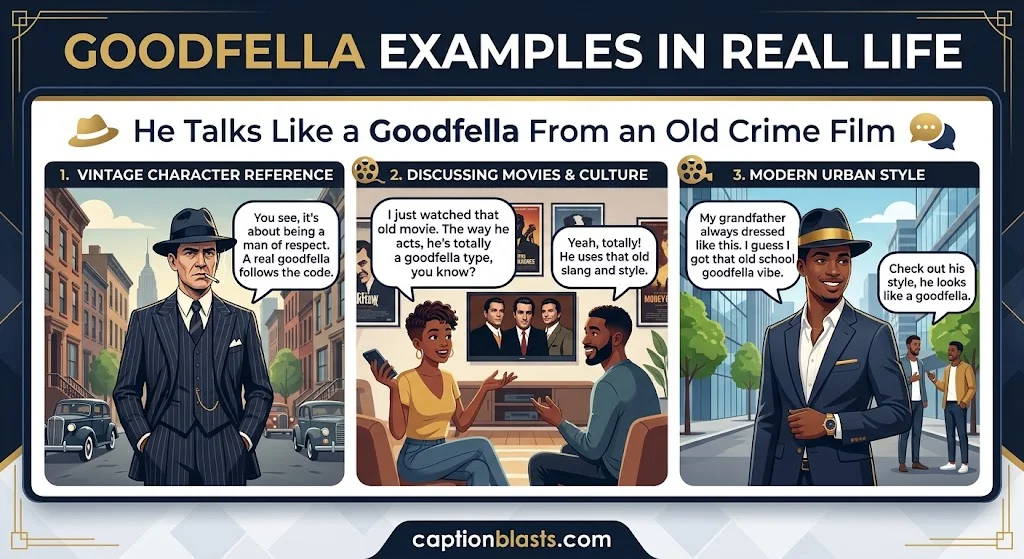
Short examples make the meaning clear. Context decides whether the word is a joke or an insult.
Mafia meaning (most common):
- “In the movie, every goodfella wants a bigger piece of the action.”
- “He talks like a goodfella from an old crime film.”
Casual or joking use:
- “Big coat, slick hair. You look like a goodfella.”
- “We’re watching a goodfella marathon tonight.”
News or crime writing (usually uses other terms):
- Reporters more often write “mobster” or “organized crime figure.”
How to use goodfella correctly:
- Use it for film talk, jokes, or casual chat.
- Use “mobster” in formal or serious writing.
- Don’t use it to describe a real person without clear facts.
Tone warning: The word is tied to crime. Calling someone a goodfella can sound like a joke or an insult. Know your audience first.
Common mistakes to avoid:

- Mixing up goodfella with “good fellow.”
- Writing “Goodfellas” when you mean one person.
- Using it for any friendly guy.
Quick check before you use it:
- Is the setting casual?
- Does the reader know the film or slang?
- Is the joke safe for that person?
If all three are yes, go ahead.
FAQs
What is Goodfellas slang for?
Goodfella is slang for a Mafia member or gangster. The word joins “good” and “fella.” It spread widely after the 1990 crime film GoodFellas.
Is goodfella a true story?
Yes, mostly. The film is based on the real life of mobster Henry Hill, as told in the book Wiseguy. Some details and names were changed for the screen.
What does “goodself” mean?
“Goodself” is not an established slang term, as far as I can find. No major dictionary lists it. It is often a misspelling or a mix-up with “goodfella” or “good self.” Check the context to see what the writer meant.
What does the term “good fellows” mean?
“Good fellows” is the plural of “good fellow.” Merriam-Webster defines it as an affable, companionable person. It dates to the 14th century. It is different from the Mafia slang “goodfellas.”
Conclusion
The goodfella meaning is simple: a Mafia gangster, in US informal slang. The word is tied to crime and the 1990 film. Use it with care, and keep it casual.
CaptionBlasts.com Team is a group of passionate content creators and digital writers dedicated to helping people express themselves through creative and engaging captions.